Transforming the Assembly Line: The Manufacturing Industry Digital Revolution
Digital Transformation in Manufacturing
The rise of the digital age has led to an important shift in how industries work. In particular, manufacturing is seen as the primary benefit of these advances. This article will examine the notion of the digital revolution and its effects on the manufacturing sector.
What is Digital Transformation?
Digital transformation is the process of integrating technology in every aspect of business that fundamentally alters the way it operates and provides benefits to customers. It’s not only about digitizing processes; it’s about harnessing technology to increase efficiency, create new processes, and come up with new business models.
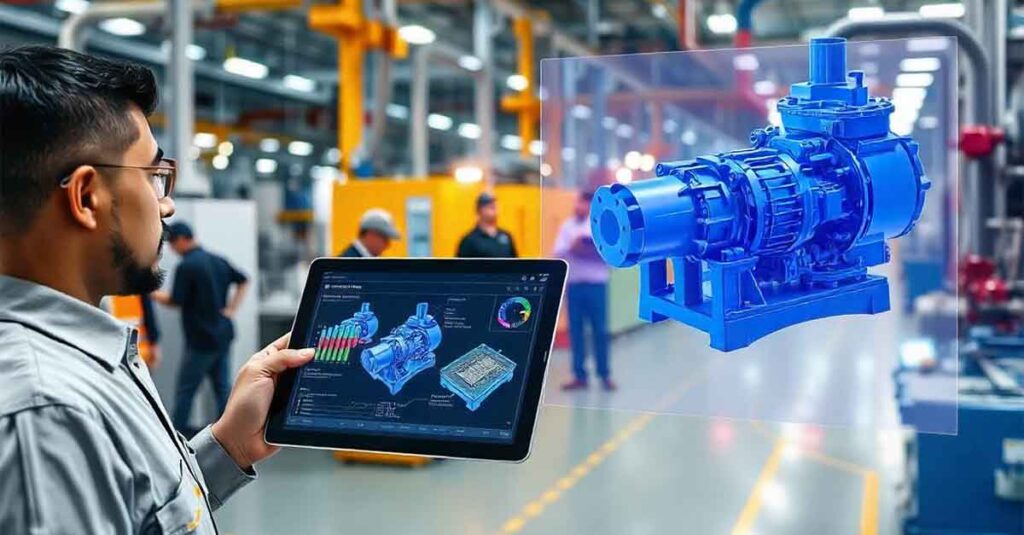
In the manufacturing sector, Digital transformation refers to the integration of cutting-edge technologies such as artificial intelligence, robotics, big data analytics, cs, and cloud computing into the manufacturing process. The transformation revolves around the concept of “smart manufacturing” or “Industry 4.0,” with the aim of building a fully integrated, collaborative system that reacts in real-time to adapt to ever-changing demands and conditions within the factory as well as the supply chain.
The Impact of Digital Transformation on the Manufacturing Industry
The effects of digital transformation on the manufacturing Industry are significant and extensive. It improves efficiency, increases productivity, and increases profits.
Through the use of technologies like automation, companies can streamline their processes, cut down time, and eliminate human errors. Advanced analytics enable real-time monitoring and prescriptive maintenance, which reduces unexpected breakdowns and increases overall efficiency.
Artificial Intelligence (AI) and Machine Learning (ML) are key to improving the quality of products and reducing wasted production by predicting and correcting production errors. AI-powered predictive analytics assist in forecasting demand, ensuring the best inventory management, and thus reducing expenses.
Digital transformation can also help promote sustainable manufacturing by maximizing the use of energy and reducing waste with techniques such as additive manufacturing.
The digitization of manufacturing Industry can open completely new models for business. For instance, it enables manufacturers to offer “product-as-a-service” where customers pay for the service a product provides, rather than owning the product itself.
Digital transformation is revolutionizing manufacturing, bringing an era of greater flexibility, unprecedented efficiency that is unprecedented and growth potential. But achieving this promise requires a thorough knowledge of the technology involved, as well as a strategy for its implementation, which we will examine in the following sections.
Understanding MES Data Integration
In the context of digital transformation of manufacturing, Manufacturing Execution Systems (MES) and data integration play a crucial role. These components are essential to increasing productivity, efficiency, and technological innovation in the manufacturing industry.
The Role of MES in Manufacturing
The Manufacturing Execution System (MES) is a computer-based solution that was created to manage, monitor, or control the activities on the manufacturing workshop floorin real time. The main purpose of MES is to ensure the efficient execution of manufacturing operations and increase output.
MES can achieve this by giving operators immediate access to all data needed to optimize manufacturing processes. This includes schedules, work orders, as well as machine availability and specifications for products. By having this information on their fingertips, workers can make quick and informed decisions that reduce downtime and increase productivity.
Furthermore, MES plays a critical role in bridging that gap between factory floor operations and the enterprise level. It is integrated with other systems, such as Enterprise Resource Planning (ERP), Product Lifecycle Management (PLM), and Supply Chain Management (SCM), to facilitate seamless data flows across the manufacturing system. The interconnected data network that is interconnected is the core of the digital transformation that is taking place in manufacturing.
The Significance of Data Integration in Digital Transformation
Data is at the core of the digital transformation occurring in manufacturing Industry . Since manufacturing operations have become more complicated, the amount of data produced increases exponentially. When properly processed and analysed, it will reveal insights that can lead to improvement in quality, efficiency, and productivity.
Data integration is about combining data from multiple sources and presenting a single perspective of that. For manufacturing, this may involve merging the data of MES, ERP, SCM, and various other systems. The merged data can be examined to discover patterns or trends and relationships that could inform decisions.
Data integration, for instance, allows a manufacturer to monitor a product’s entire lifecycle from the initial purchase of raw materials to the final delivery, giving useful insights into areas in which costs can be cut or processes can be improved. It also assists in the maintenance process by identifying patterns that could indicate equipment malfunction.
Data integration also plays an important role in the development of advanced analytics and AI-based manufacturing applications. Through the integration of data into machine-learning algorithms, manufacturers can create predictive models, automate processes, and improve performance.
In the end, MES and data integration are the key elements of digital transformation that are taking place in manufacturing. In allowing real-time visibility as well as seamless data flow across systems and making informed decisions, and assisting companies in achieving operational excellence and remaining relevant in the modern world.
Artificial Intelligence in Manufacturing
Artificial Intelligence (AI) is rapidly changing the face of the manufacturing industry. Through the use of AI’s capabilities, manufacturing processes are getting more accurate, efficient, and flexible.
How AI is Changing the Manufacturing Landscape
AI is no longer a futuristic idea in the realm of manufacturing. It’s a real-world tool that is changing the way we think about business. Starting from quality and predictive maintenance, to the optimization of supply chain processes and production scheduling, AI is making significant advances in the manufacturing sector.
AI algorithms can analyze complex databases, discovering patterns and making precise predictions. This ability is particularly useful for predictive maintenance, in which AI can detect breakdowns in equipment and suggest maintenance tasks prior to breakdowns occurring. Learn More about manufacturing predictive maintenance to grasp the significance of this capability.
AI-powered automation has also improved manufacturing processes. For example, AI can optimize machine workflows and schedules, thus reducing the amount of downtime and increasing productivity. It also improves the management of supply chains by offering immediate insights as well as predictive analysis. This helps manufacturers make better decisions and cut operating costs.
Additionally, AI can be a game-changer in quality control. AI algorithms can spot the presence of defects and irregularities in products with greater precision than human inspection and resulting in better customer satisfaction and product quality. Take a look at our article about the quality of manufacturing to gain more insight.
The Benefits of AI in Digital Transformation
Incorporating AI into manufacturing processes offers a variety of advantages, making it an essential element of the digital transformation in the manufacturing sector.
- Increased efficiency: AI algorithms can analyze huge amounts of data quickly than humans, resulting in more rapid decision-making and enhanced operational efficiency.
- Higher quality: AI can detect and fix quality issues more precisely and ensure consistent quality of the product, and reduce the amount of waste.
- Predictive maintenance: AI can predict machine problems before they happen, which reduces the amount of downtime and maintenance costs.
- Optimizing Supply Chains: In real time, analysis of data lets AI improve the management of inventory and forecasting demand and improve supply chain efficiency.
- Improved Productivity: Through automation of mundane tasks, AI can free up resources for more challenging and innovative tasks, increasing overall efficiency.
AI’s contribution to the digital transformation of the manufacturing industry is important. With the help of AI, manufacturers are able to stay on top of the changing manufacturing landscape. To get a deeper understanding of AI’s capabilities in manufacturing, read the article we wrote on AI applications in the manufacturing industry.
Implementing Digital Transformation
The journey to digital transformation within manufacturing Industry is an important step in the direction of efficiency and productivity. It requires a well-planned approach and the ability to recognize potential obstacles to make sure that the transition is smooth.
Steps in Adopting Digital Transformation
- Know the current state: The first step is to analyze the level of digital maturity within manufacturing processes. Review the current processes, workflows, systems, and stacks of technology to find areas of improvement and the possibility of digital interventions.
- Establish clear objectives: Determine the objectives and goals for the digital transformation program. If it’s about improving efficiency in operations and reducing downtime or improving the quality of production, the setting of clear goals will guide the transformation process.
- Create a Digital Strategy: Devise a complete digital strategy that is aligned with the goals of the company. It should comprise the choice of appropriate technology, such as the manufacturing execution system, Artificial Intelligence, in addition to data analytics software that aids in the process of change.
- Implementation in phases. Digital transformation is a major project with a lot of planning and implementation. Implementing the process in stages allows for better management of resources, reduces disruption to current operations, and permits adjustments based on the feedback and performance.
- Monitor and optimize: Make use of data analytics to track the performance of your digital solutions. Regular monitoring allows the identification of issues and helps optimize processes and technologies.
Challenges in Implementing Digital Transformation
In spite of the numerous advantages of digital transformation, companies may face some challenges in the process of implementation. The most common challenges are:
- Reluctance to Change: People who are used to manufacturing processes of the past might be resistant to changes, which is why it’s important to be able to handle change efficiently and provide adequate training and assistance.
- Data Integration: Integrating data from a variety of systems and sources can be difficult, but it is crucial for providing a single overview of the operation. Manufacturers can benefit from MES data integration to accomplish this goal.
- Cybersecurity Risks: As the amount of digital connectivity expands, so does the risk for cyberattacks. Manufacturers should consider cybersecurity as a priority in production to secure their systems and their data.
- Technology Selection: Selecting the most appropriate technology solution for your specific manufacturing requirements isn’t easy due to the variety of alternatives available. Manufacturers have to make informed decisions according to their particular requirements, budget, and plans for growth in the future.
If you can overcome these challenges, you will greatly enhance the efficiency of digital transformation initiatives, opening the way to improve productivity, efficiency, and competitiveness within manufacturing.
Future of Manufacturing
As manufacturing is evolving as it does, the digital revolution is likely to have a major role to play in determining its future. Through embracing the latest technologies and incorporating advanced technology into their processes, manufacturing companies can keep up with the ever-changing landscape of industry.
Predictions for Digital Transformation in Manufacturing
One of the major trends expected to determine how manufacturing will evolve is increasing utilization of Artificial Intelligence (AI) and Machine Learning (ML). These technologies will greatly improve manufacturing processes by increasing efficiency, reducing waste, and making it possible to perform automated maintenance. To find out more about the importance that AI as well as ML for manufacturing, check out our articles about the use of artificial intelligence and amachine learninging in manufacturing.
Another major trend is the rapid growth of Industrial Internet of Things (IIoT) and cloud computing. These technologies allow for the collection and analysis of data in real-time, which can lead to better performance decision-making. For more details on this subject, refer to our blog posts about cloud computing for manufacturing as well as the analysis of manufacturing data.
In addition, advanced manufacturing Industry technologies like automation and additive manufacturing are expected to revolutionize the field. These tools can not only improve productivity and precision, but they also allow for greater flexibility and customization. For more details, refer to our article on additive manufacturing technology and automation in the manufacturing sector.
How to Prepare for the Future of Digital Manufacturing
To be prepared to meet the challenges of digital production, companies should embrace the latest techniques and put their money into digital change. This involves implementing advanced technology such as Manufacturing Execution Systems (MES) to improve the integration of data and increase the efficiency of manufacturing processes. For more details about this, read the article about manufacturing execution systems.
Additionally, companies should concentrate on educating their employees to make the most of this modern technology. By providing regular opportunities for training and development can ensure that employees can keep up with the ever-changing landscape of the industry.
Additionally, manufacturers must develop a proactive plan to protect themselves from cyberattacks. As industries become more digitalized, the danger of cyber attacks grows. The implementation of robust cybersecurity measures will protect sensitive information and help ensure continuity of business. For more details on this subject, read our article on manufacturing cybersecurity.
Staying abreast of new trends and technology, manufacturers Industry are able to successfully make it through the digital age and gain an advantage in the future of manufacturing Industry .