
How Does Digital Manufacturing Work?
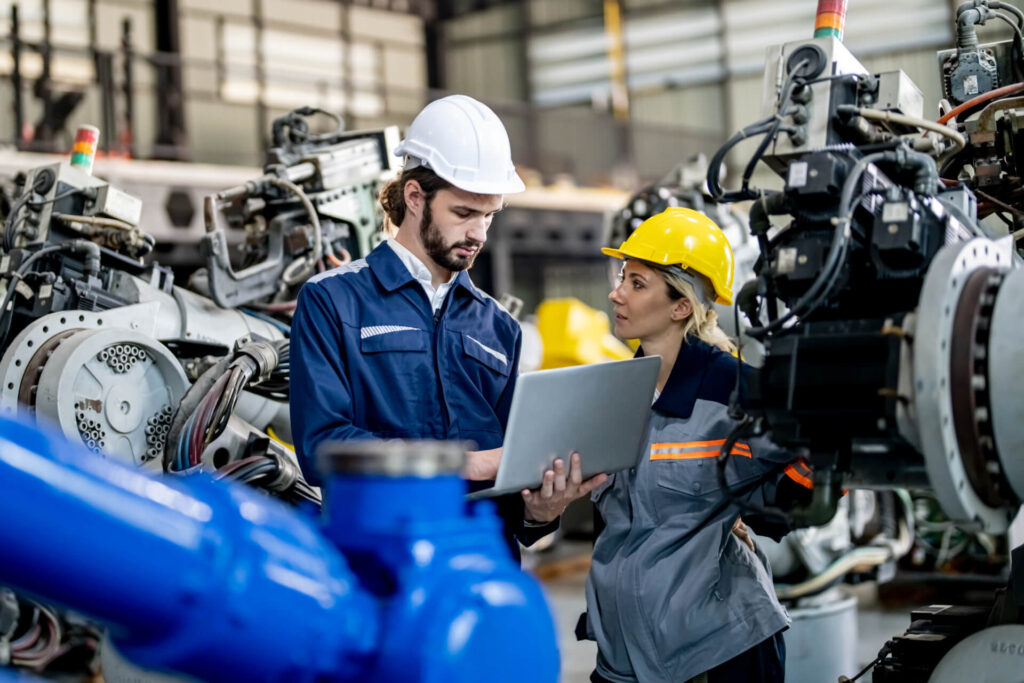
Digital manufacturing is a holistic approach to manufacturing that involves computers throughout manufacturing, such as supply chain, processes, or even the process itself,f from the design phase to the production.
This renaissance in manufacturing is often referred to by the name of Industry 4.0, or the Fourth Industrial Revolution. Let’s look at the latest developments in the field of digital manufacturing to understand how this technology will affect what the next generation of manufacturers will look like.
Rise of Digital Manufacturing
With the rise of 5G private and IoT, more manufacturing companies are adopting the latest technologies to boost their efficiency, increase the safety of their employee,s and make better business choices.
The data remained in silos throughout the company, leaving important data in the open. For instance, before IoT sensors, manufacturers were unable to track older analog machines or integrate different streams of data into a single monitoring platform.
Cloud computing, artificial Intelligence and private cellular communication were more readily available; manufacturers were able to use the power of this technology to improve their manufacturing processes. We are seeing IoT sensors deployed on a massive scale across factories, completely managed from one console, and managed by secure 5G networks.
There are also more companies using 5G-powered autonomous robotics and system automation to enhance efficiency and provide a safer working environment.
Benefits and Challenges of Digital Manufacturing
Digital manufacturing can be a challenge to implement, but it’s worth the cost over the long term. Let’s look at some of the major advantages and issues manufacturers face when it comes to the process of digitizing.
Digital Manufacturing Benefits
- Lower costs: Automation and better visibility can reduce downtime, risks, and inefficiencies within the manufacturing process.
- Efficiency in the operation can be improved: Automating processes can simplify production workflows, allowing businesses to speed up the process of their product launch as well as decrease interruptions.
- Eliminate data silos: Data collection, processing, and transformationprovides companies with unique insight into their processes and business operations, allowing them to improve and change in ways that are otherwise impossible.
- Increase the satisfaction of staff and ensure improved safety and satisfaction of employees: Technology like predictive monitoring can aid in improving the process of troubleshooting and can reduce the risk of dangerous work, which allows employees to work more safely and effectively.
Digital Manufacturing Challenges
- Responding to stakeholder opposition: Stakeholders and employees may oppose change whenever new technology or a solution is suggested. Digital manufacturing is a huge undertaking that usually requires the cooperation of stakeholders.
- Security and privacy management: Digital manufacturing needs a strong security policy to ensure the security of data while also making sure all standards of regulation are adhered to.
- Close thskill gapll: Technology advancements often create gaps in skills that could take a long time to close.
Three Dimensions of Digital Manufacturing
To understand better how digital manufacturing functions, it is best to break down the three dimensions of digital manufacturing. The three dimensions are in sync to facilitate the process of smart manufacturing and assist manufacturers in understanding the necessity of collaborationwithinn the group.
Smart Factory
The smart factory aspect focuses on connecting resources, hardware staff, equipment, and systems in a manner that permits continuous data gathering. In this phase, manufacturers frequently use developer APIs as well as IoT sensors to collect and share data that can then be processed into actionable information.
Manufacturers can also utilize private 5G networks in order to link all the IoT sensors, edge servers, and automation platforms. Privately owned 5G networks provide the manufacturers complete control over their data and privacy, while making it easy for them to incorporate intotheir own applications.
Once the data collection is established, this gathering happens automatically and sets the foundation for the automated process and subsequent remediation. For instance, the temperature sensor is indicating that the HVAC unit is not working and needs to be repaired, it could make a maintenance request and then automatically switch off the backup unit until the temperature target is achieved.
Digital Thread
Digital thread tracks the product’s development manufacturingt, sourcing, ng and life cycle to ensure that the digital appearance of the product is consistent with the physical item. Quality control, engineers, and management are typically connected to the process of the digital thread. Digital threads are a framework that permits data that is collected to remain accessible and up-to-date through its creation, revision, and sale.
Value Chain
The aim in the value chain aspect is to streamline the processes that you currently have in place to improve customer satisfaction, creating a more efficient product, as well as streamlining process integration. These improvements also affect the way data is handled and shared across various areas and platforms.
Businesses can improve the value chains of their business by standardizing their systems, like the ERP system, the collection of data, and the orchestration of devices. Through creating repeatable processes and consistent systems across the enterprise thee manufacturers will benefit from an extremely automated and efficient manufacturing process.
Future of Digital Manufacturing
Digital manufacturing has advanced leaps and bounds withinjust at few years, especially since the introduction of private 5G. As more companies implement augmented reality, robotics automation, and IoT in their network, the need for reliable wireless will only increase.
5G allows digital companies to connect all of their sensors, devices,s and employees to a centrally controlled console regardlessof theire location. Contrary to other wireless technologies, 5G provides ultra-low latency connectivity that offers a greater range of both outdoor and indoor coverage.
A private model of 5G offers manufacturers complete control over their cell budget as well as privacy and resource allocation. Private 5G lets companies create their own digital manufacturing network using a high-quality network infrastructure, which they can control.
Celona 5G LAN Solution
Celona works with digital producers to offer private 5G cell wireless networks in an integrated Turnkey solution for 5G networks to the manufacturing process.
As part of the Celona network, RK private access points can be easily installed throughout a facility of anenterprise’s facility and enforce service-level goals for the most important IoT applications, making it possible to monitor the latency and throughput needs proactively.
Utilizing cloud-based networking principles, the Celona 5G LAN can make implementing private cellular wireless in IoT structures and systems a straight-from-the-box experience. Because it is able to seamlessly integrate with security policies for enterprise networks and procedures, onboarding is possible to be integrated with the existing infrastructure for IT and wireless without affecting the operations of the business.
If you’re looking to enhance your manufacturing processes using digital technology, Celona can help. Take a look at our cellular WLAN planner that will determine the dimensions of your 5G LAN both outdoors and indoors, and try out our innovative solution.