
The Emergence of AI Tools Design: Everything You Need to Know
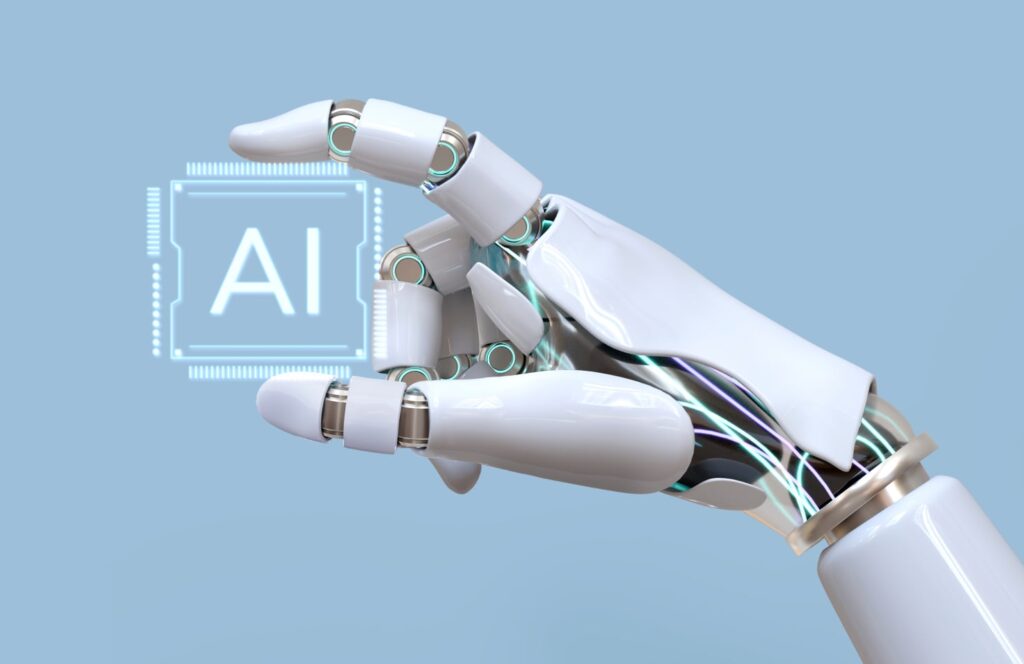
AI tools for design – are they now the designer’s best partner? What specifically is AI altering our work practices? Let’s look at the future and present of design using AI. Find out how AI is improving the speed of things, making them smarter and perhaps even better.
The world of design is changing quickly. AI isn’t merely creeping in and becoming an integral part of our daily lives. They’re not just a second pair of hands. They’re now essential to the process of creativity. From thinking up ideas to fine-tuning the finer points, AI can do a great job. However, here’s the catch that AI’s objective is to let AI cooperate with you, not against you.
This is what AI software for design is boosting the boundaries of design and enhancing it.
AI is Design: What’s Next? Are We Today
AI is appearing everywhere, and design isn’t an exception. In everything from Adobe to Canva, AI tools are aiding designers to be more efficient. However, AI isn’t there to take your place. Imagine it as having a smart assistant that handles all the lifting. While you concentrate on the fun aspect: creating.
For instance, AI can help generate hundreds of ideas for design simultaneously or even automate repetitive tasks. It could even provide information that would take a long time to discover by yourself. However, at the end of all of it, you must decide on how you can use these insights to make something amazing.
Important AI Tools for Design You Need to Be Using
Let’s look at the tools that are altering the ways designers work:
Adobe Sensei
Inbuilt in integrated into Adobe’s Creative Suite, Sensei can perform tasks such as:
- Content-aware fill – Filling in the background of an image after you have removed the object.
- Neural filters – changing the expression of a face in a photograph.
Imagine being able to modify an image in a matter of moments instead of days. Sensei is the best choice for tedious tasks, to help you concentrate on the larger image. But this AI tool might be unable to handle complex or complicated editing. For instance, complex backgrounds can be difficult for content-aware fill. Expect awkward patches, which will require manual refinement.
Canva Magic Resize
Canva is one of the most popular because it’s easy. With its AI-powered features such as Magic Resize, you can quickly adjust designs with just one click. Don’t have to resize the same image manually when using banners, social media posters, and so on.
However, some photos that have been resized don’t always maintain the proper dimensions or layout. The format is ideal for fast adjustments. However, don’t count on perfect adjustments.
Figma smart selection and auto layout
Figma’s interface for collaboration gets better thanks to AI features.
- Smart Selection predicts what you should do when you choose several items, including colors or forms.
- Auto Layout adapts components to fit various screen sizes, making it ideal to create a fluid design.
While these functions can speed up repetitive tasks, you’ll still have to dive into those complex designs and inventive solutions that AI isn’t sure about yet.
Sketch2Code from Microsoft
Have you ever wished the sketch you created could transform into code? Sketch2Code accomplishes exactly that. You sketch out the wireframe in rough form, and AI converts it to HTML automatically. This tool accelerates the initial phases of designing websites and gives you time to work on your concepts.
However, it is important to remember that Sketch2Code can produce functional prototypes fast; st however, it’s not able to generate refined and well-optimized code. It may require an expert’s help to tidy up and ensure it’s up to the standards of the industry.
How AI is changing the workflow
AI is speeding up each step in the process of design. Let’s take a look:
More efficient and faster thinking
Are you looking for an idea? AI tools can give you many design possibilities with only a few inputs. This is like having an imagination machine in your hands and allowing you to concentrate on the ideas you’d like to investigate.
Intelligent User Experience (UX)
AI can analyse the behavior of users and suggest layout modifications to increase user engagement. For instance, if users are not interacting with the same webpage, AI will be able to identify the issue and recommend solutions to fix the issue.
More Inclusions Design
AI helps designers to create more accessible experiences, so that everyone can benefit from your designs. For instance, it could detect low contrast, which could cause a website to be difficult for people who have a visual impairment to navigate.
One good example of this is the AI-driven captioning software. They add subtitles to videos in real-time to help your content be more accessible. You may have observed this feature in action on Instagram reels or YouTube videos.
What is the Future of AI in Design
AI is only just beginning. Here’s the direction AI is taking to 2024 and beyond.
AI Design Assistants
An AI robot sits on a laptop on the sofa at home. It is generative AI. The futuristic humanoid robot is connected to a computer inside the room. Concept of technology education, learning, communication the future. Illustration
Helping with technical work and providing innovative enhancements? Please sign me up! Imagine an AI colleague looking at your work and saying, “H, I think this color scheme might be better balanced. Try switching out that green hue to a more neutral shade.”
Voice-Activated Design
Voice recording of conversations via computer, with customers, telemarketing, andconsultingn, and voice assistance access to applications and iinformationon writing amessages, age sendingsend it.
We’re already seeing voice interfaces in design software. In the near future, you will be able to say “Make that background lighter” as well as “Center on this word” and have it completed in a matter of minutes. There is no keyboard or mouse required.
Generative Design
A person writes with a pen on a sheet of paper. The image is called AI and is set against a blue background.
This is the point where AI truly shines. Instead of starting completely from scratch, AIcano generates different designs depending on the goals you have set. Industrial designers and architects are already making use of this, and in the near future, you can too.
Wrapping It Up
How do you feel now? Are you ready to take on the advancements of AI within design?
AI will be around for a while, but remember that AI isn’t in a position to replace you. Let’s delegate the mundane tasks to AI so that you can concentrate on being innovative and tackling issues. The biggest challenge is understanding how to utilize the tools in a way that doesn’t lose your human touch. Since, at the end of the day, regardless of how intelligent AI becomes, it’s your thoughts that bring an idea to reality.
FAQs
What are AI Design tools?
Software that makes use of artificial intelligence to help or automate a portion of the process of designfor e.g. layout suggestions, images, the generation of image color palettes, and UI mockups.
What are the ways AI tools are changing the design process?
They make routine tasks easier, assist with brainstorming, decrease manual eeffortand let designers focus more on strategy and innovation.
What are the advantages of making use of AI tools for design?
Speedier prototyping, improved consistency of design, cost savings, the ability to create numerous variations in a short time, and to democratize design abilities.
What are the potential drawbacks or issues?
Quality control concerns, over-reliance on automated recommendatione, ethical issues such as copyright/data usage, and the potential loss of human interaction.
What should designers consider when choosing AI tools?
Look for tools that integrate well with your existing workflow, provide good control/customization, ensure transparency of how AI works, and have a strong community or support.